

Champions League
PSG Chasing a Third Champions League Title
Only one club has won three in a row in the modern era. Here is why Paris will find it so hard, and who can stop them.
 Watch on YouTube ↗
PSG Chasing a Third Champions League
Only one club has won three in a row in the modern era. Here is why Paris will find it so hard, and who can stop them.
Budapest, May 30, 2026
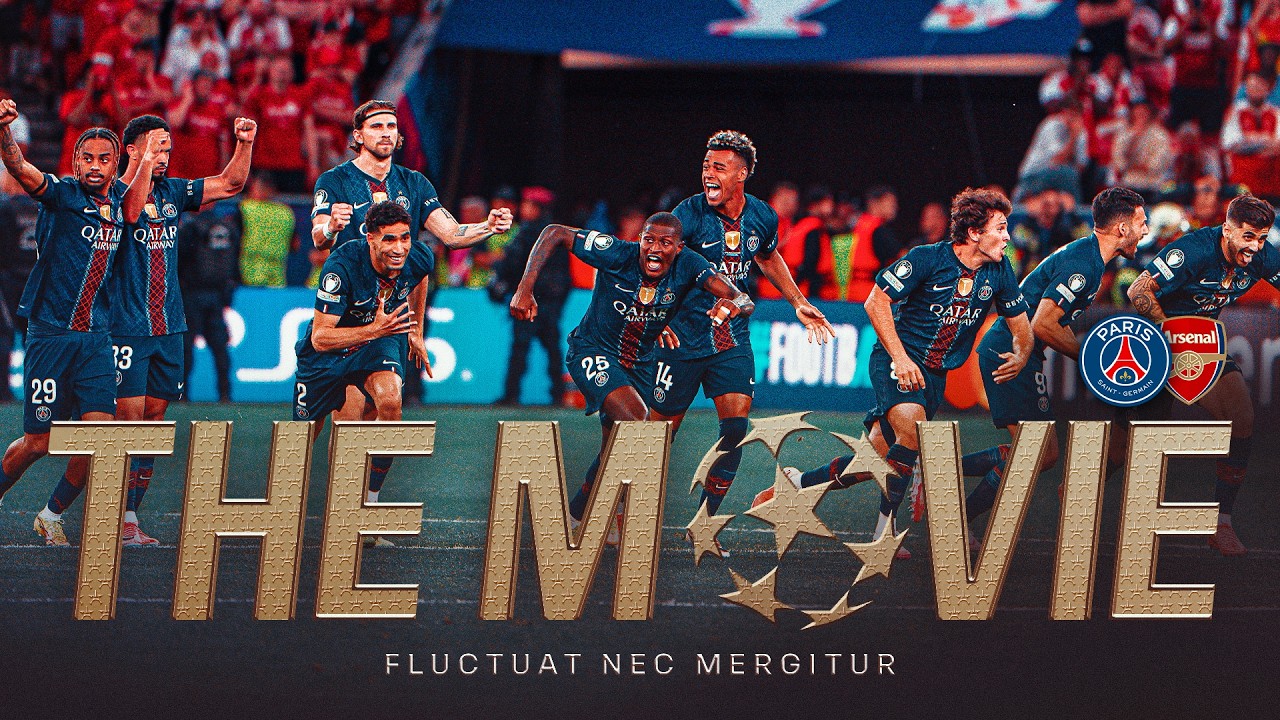
When Gabriel's penalty sailed over the crossbar at the Puskás Aréna, Paris Saint-Germain became something they had never been in half a century of trying: a club that could keep the biggest trophy in club football. A year after the 5-0 demolition of Inter in Munich, Luis Enrique's side had retained the Champions League, 1-1 with Arsenal after extra time and 4-3 on penalties, with Ousmane Dembélé's second-half spot kick cancelling out Kai Havertz's sixth-minute opener. They are the first team to defend the title since Real Madrid's three-year reign from 2016 to 2018.
That comparison is now the whole story of PSG's season. Two is history. Three is immortality. And three is the number Real Madrid, and only Real Madrid, has reached since the competition was rebranded in 1992.
The Club of Three
Winning the European Cup three times in a row is the rarest achievement in the sport. In seventy years it has happened four times, and every one of those teams is remembered as an era rather than a side.
- Real Madrid, 1956 to 1960. The founders. Di Stéfano, Puskás and Gento won the first five editions outright, a run that has never been threatened and never will be.
- Ajax, 1971 to 1973. Cruyff, Neeskens and Michels' Total Football, the team that taught the modern game how to move. Three finals, three wins, and a philosophy that still runs through Barcelona and Manchester City today.
- Bayern Munich, 1974 to 1976. Beckenbauer, Müller and Maier picked up where Ajax left off, the spine of a West Germany side that won the World Cup in between.
- Real Madrid, 2016 to 2018. Zidane, Ronaldo, Modrić and Ramos. Three finals, three different opponents, and the only three-peat of the Champions League era.
The list of teams that tried and failed is longer and more instructive. Between AC Milan in 1990 and Madrid in 2017, nobody retained the trophy at all, a drought of twenty-seven years. Barcelona's 2009 champions were stopped by José Mourinho's Inter in the 2010 semi-final. Barcelona's 2011 team fell to Chelsea. Bayern's 2013 treble winners were dismantled by Madrid a year later. Manchester City's 2023 champions went out to Madrid in a quarter-final shootout. Madrid's own 2018 side, the last to win two in a row, lost their third attempt at home to Ajax in the round of 16. Holding the trophy has a habit of making the holders the tournament's favourite target.
Why the Third Is the Hardest
The format is longer and less forgiving. The 36-team league phase means eight matches against eight different opponents before a knockout ball is kicked, and only the top eight go straight to the round of 16. PSG's draw, made on August 27, is a champion's draw in the worst sense: Barcelona, Roma, Galatasaray and Slovan Bratislava at the Parc des Princes, and trips to Manchester City, Aston Villa, Villarreal and Como. Finish ninth or lower and there is a two-legged playoff in February on top of everything else.
The squad has barely stopped. Since Luis Enrique arrived, PSG have played a Club World Cup summer and then a World Cup summer back to back. Spain lifted the 2026 trophy on July 19 after 120 minutes against Argentina, and the man who scored the winner, Ferran Torres, arrived in Paris weeks later as one of the club's two headline signings. Half of this squad started pre-season already tired.
The margins have been thin. The 2026 final was decided by a single penalty in normal time and a single miss in the shootout. Luis Enrique has won all six shootouts he has contested at PSG. That is a remarkable record, and it is not a plan. At some point a keeper guesses right.
The system has to survive the stars. Luis Enrique's Paris is built on structure rather than names, the adaptive positional press we have written about before in these pages. The club spent September handing out six new contracts, the coach's among them, to lock in that continuity. Marquinhos, Hakimi and Dembélé all stayed, and Khvicha Kvaratskhelia, who was reportedly open to leaving in March, is still in the number 7 shirt. Add Mika Godts from Ajax and Ferran Torres from Barcelona and the depth is better than a year ago. But every retained champion in history has looked deeper on paper in September than it did in April.
The Protagonists Who Can Stop Them
Arsenal. The team that came closest. Mikel Arteta's side won the Premier League in 2025-26, their first title in more than two decades, and went through an entire European campaign unbeaten until the shootout in Budapest. Declan Rice's midfield and Havertz's early goal had PSG on the ropes for forty-five minutes. The response has been ruthless: Bruno Guimarães from Newcastle, Ezri Konsa from Aston Villa, Christos Tzolis from Club Brugge and Piero Hincapié all added to a squad that already knew how to beat everyone except Paris. The markets have them as joint favourites, and they have a score to settle.
Barcelona. La Liga champions again under Hansi Flick, and the only side in Europe that can match PSG's front line for pure talent. Lamine Yamal is now a captain at nineteen. The problem is the other end of the pitch: Barcelona failed to keep a clean sheet in any of their twelve Champions League matches last season and went out to Atlético Madrid in the quarter-finals. With Ter Stegen and Araújo loaned out, Flick is rebuilding his defence in real time. They visit Paris in the league phase, which will tell us early whether it has worked.
Bayern Munich. The team that should have beaten PSG. Vincent Kompany's Bayern broke the Bundesliga scoring record, lost once all season, and Harry Kane scored 36 league goals. They knocked Real Madrid out 6-4 on aggregate and then lost a semi-final to Paris 6-5 over two legs, the tie of the tournament. Bayern have a three-peat of their own in the trophy room and a squad that grows more complete every year. Nobody in Europe is more dangerous when the ball turns over.
Real Madrid. The record-holders, and the club with the most to lose if PSG succeed. Last season was a catastrophe by their standards: Xabi Alonso gone after 233 days, Álvaro Arbeloa as caretaker, no trophies, second in La Liga and a 6-4 quarter-final exit to Bayern. The answer is José Mourinho, appointed in June through 2029. It is worth remembering what he did the last time a holder tried to go again: his Inter stopped Guardiola's Barcelona in 2010. Mbappé, Bellingham and Vinícius under the most pragmatic knockout coach of his generation is exactly the kind of team that ends a dynasty in a two-legged tie.
Manchester City. A new era under Enzo Maresca after Pep Guardiola's departure, and one of PSG's league-phase hosts. City have the squad depth and the Etihad, and in Gianluigi Donnarumma they have the goalkeeper who won PSG their first title. There is no one better placed to explain to his new teammates how to beat his old ones.
Liverpool and Atlético. Liverpool were dismantled 4-0 on aggregate by Paris last spring and have since replaced Arne Slot with Andoni Iraola, whose hybrid press is designed to do to PSG what PSG do to everyone else. Atlético Madrid beat Barcelona, took Arsenal to the last minutes of a semi-final, and remain the most uncomfortable tie in the draw for a team that wants the ball.
The Verdict
Bookmakers rank Arsenal and Barcelona alongside Paris at the top of the market, which is another way of saying nobody has more than a one-in-five chance. That feels right. PSG are the best-coached team in Europe with the most coherent system and the deepest squad they have ever had. They are also tired, targeted, and one saved penalty away from a different story. Real Madrid's record survived twenty-seven years without a challenger. Whether it survives this one will be decided in Budapest's shadow, sometime next May.